
How the Ducks Lined Up: A Journey Through Chaos and Chance
He was our geography tutor — a gentle, disciplined man whose presence commanded respect without ever needing to raise his voice. He had a way of teaching that made even the driest topics feel like journeys across landscapes we had never seen. When exam season came, he invigilated our papers with the seriousness of a man who believed deeply in fairness and the sanctity of education. And when the Higher School Certificate exams were over, he was the one entrusted with delivering the scripts to the WAEC office at Ijokodo.
On the day fate struck, he did something he rarely did: he took his young son along for the drive . Our tutor had planned on going home once he was through with submitting the papers, it thus made sense to have his son follow him to Ijokodo and from thence home. It was one of those small decisions that life sometimes uses to rearrange destinies.
Somewhere along the Sango-Eleyele road, a mechanic test‑driving a car lost control. He hit a curve too fast, swerved violently into the wrong lane, and collided head‑on with our tutor’s vehicle. The impact was brutal. It killed the tutor instantly and left his son maimed — a child who had simply wanted to ride with his father.
The exam papers — our scripts — were flung across the road, scattered like wounded birds. I imagine some were stained with blood, others torn, others blown into the bush by the wind. Knowing our superstitious nature, I doubt any examiner would have willingly touched them, let alone marked them. More likely, the results were pieced together through guesswork, hurried decisions, or whatever arbitrary method the WAEC officials could muster in the chaos.
I make no excuses for my own dismal performance — a B-E-E-F in General Paper, Mathematics, Geography, and Economics. But I know, deep down, that I deserved more than what appeared on that result slip. Something about that tragedy, that scattering of scripts, that abrupt end to a man’s life, has always made me wonder how much of our academic fate was shaped by that accident on Ijokodo Road.
I wasn’t a bad student. Not the most brilliant, but not hopeless either. Mathematics was never my strongest suit, but I pushed through. I had stumbled upon two books — A Notebook in Pure Mathematics (the red one) and A Notebook in Applied Mathematics (the green one) by L, Harwood Clarke — and those books became my companions. I worked through the exercises diligently. I wasn’t a Blakey, but I certainly wasn’t at the bottom of the class.
The only A‑Level textbook I remember buying was a Mathematics one, and I loved the applied sections — trajectories, areas under curves, parabolas. Those topics made sense to me in a way that pure theory (integration and differentiation) never did. They felt like puzzles I could solve, small victories in a world that often felt overwhelming.
But youthful carelessness has a way of undoing even the best intentions. I copied the exam timetable wrongly, shifting all the dates by one day. That mistake meant I completely missed Economics. The F was no surprise — though I would have preferred a blank to show I was absent rather than a failure. With the little time left, I scrambled through the remaining subjects, but the damage was done.
I knew what awaited me. I wasn’t going to get the 11 or 12 points needed for direct entry. And I certainly wasn’t going to confess to anyone what had happened. Shame has a way of silencing even the most talkative among us.
As fate would have it, my mother sent money for me to purchase the JAMB form. Back then, the JAMB office felt like a sacred place — the kind of institution you approached with reverence. They issued long forms and brochures that felt almost ceremonial, as though you were being handed the keys to your future.
It wasn’t my first time writing JAMB. The first time, I had chosen Accounting, my preferred course, but missed the cut‑off by about five points. My uncle, using his connections, managed to switch my admission to Mathematics Education at the University of Lagos. While I matriculated and thereafter spent a few weeks — maybe a month at the University, I returned back to Government College Ibadan to complete the A‑Levels, much to my uncle’s irritation. He swore never to intervene on my behalf again. So when the B-E-E-F result came out, I knew I was finished. That should have been the end of the road for me.
But destiny had other plans.
The JAMB result arrived before the A‑Level result, and I had passed — just barely — by two or three points above the cut‑off. It wasn’t a guarantee of admission, but it was enough to keep hope alive.
When I arrived, again, at the University of Lagos for the admission process — certificate verification, tuition payment, acceptance fees, medicals — I felt like one of the proudest people alive. I held my O‑Level results high for anyone who cared to look: six credits, two passes, and a follow‑up GCE that confirmed my five core credits. I was proud of them. They were my badge of survival.
That pride evaporated the moment I met him — a prodigy from King’s College. I must have been sixteen; he couldn’t have been older than fourteen. His result was almost perfect: six As and a C. I quietly folded my own result and slipped it away. He was admitted into Business Administration; I was admitted into Accounting.
He didn’t last long.
My two years at GCI had matured me. The freedom of campus life didn’t distract me. I attended lectures, avoided trouble, and stayed focused. He did the opposite. By the end of our second year, he had been asked to withdraw. It was a sobering reminder that brilliance without discipline is a fragile thing.
But my own journey wasn’t without its own moment of darkness.
One afternoon, I returned to my hostel only to be told by the porters that I had to move out immediately. The school registry had issued instructions: I had been admitted wrongfully. Earlier that day, someone had walked into our lecture hall, called out the name “Bakare, A.O,” and I had responded. I was escorted out of class like a criminal.
The accusation? That I had presented fake results.
But how? I hadn’t even submitted my A‑Level results. The only documents I presented were my O‑Levels — the very ones I was so proud of.
I marched straight to the Senate Building, to the office of a friend of my uncle. He made a few calls and uncovered the truth: it was a case of mistaken identity. There was truly a Bakare A.O — a direct‑entry student in Year 2 — and he was the one with fraudulent documents and not me, the Bakare, O.A in Year 1.
I was reinstated to my lectures and my hostel.
But no apology ever came from the university.
So if anyone from Unilag is reading this, that apology is still outstanding.
Looking back now, I see how fragile the path to adulthood can be — how easily a life can be derailed by a wrong timetable, a tragic accident, a bureaucratic error, or a mechanic who loses control of a car. I think of our geography tutor often. A man who woke up one morning to do his duty, to deliver exam papers, to serve the system faithfully — only to have his life cut short on Ijokodo Road.
And I think of his son, whose life was altered forever by a decision as small as sitting in the passenger seat. He became either lame or got his limb amputated.
Life is full of these moments — the ones we see coming and the ones that ambush us. The ones we blame ourselves for and the ones we never could have prevented. The ones that shape us quietly and the ones that shake us violently.
In the end, we survive them all — or at least, we try to.
And when I reflect on the winding path that brought me from that accident‑scarred exam season to the gates of the University of Lagos, I realise something I couldn’t have understood then: that my journey was never a straight line. It was a series of stumbles, near‑misses, unexpected rescues, and moments that felt like the end of the road. Yet somehow, through all the chaos, the pieces kept shifting until they formed a path I could walk.
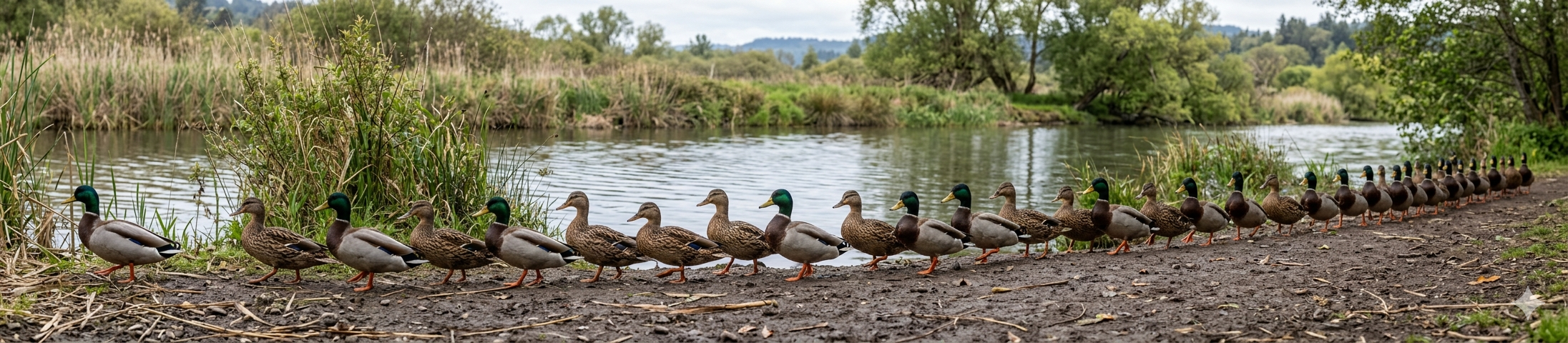
It is only with hindsight that I understand how life quietly arranges its own order — how the ducks line up even when we think they are hopelessly scattered. Success, I have learned, is rarely the product of perfection. It is the outcome of persistence, grace, timing, and the invisible hands that guide us through the moments we thought would break us.
In the end, every misstep, every disappointment, every unexpected turn became part of the alignment that carried me forward.


Famose B.
Success, is rarely the product of perfection. It is the outcome of persistence, grace, timing, and the invisible hands that guide us through the moments we thought would break us.
Profound!
bimbo
Blessing, true and I am happy the phrase resonates with you.
OTEMUYIWA KAYODE
Seun, this little write up is a masterpiece.It is an eye opener on intricacies of the ways of life. One truth is clear: Life is never a straight line. That should guide and encourage us that whatever life throws at us we should face it with calmness and look for the next available route to move forward. God bless you for encouraging piece.
bimbo
Sir K, that is very true and it affirms what my experiences have been and the way I approach life generally. The horse is prepared for the day of the battle but victory is of the Lord.
Saf
I will be honest—I am usually the quiet reader who enjoys your beautiful writing from the sidelines without saying much. But today, I felt a genuine obligation to speak up. This piece didn’t just pass through my feed; it deeply resonated with me.
Your reflection on success and the winding path is incredibly moving. There is a profound truth in your observation that success isn’t about perfection, but rather the result of persistence and grace working in collaboration.
The way you described your journey—from the ‘accident-scarred exam season’ to the ‘gates of the University of Lagos’—beautifully illustrates how God’s hand directs our paths even when we are too close to the chaos to see it. It serves as a reminder that:
• Our ends are often His beginnings: Those moments that felt like the end of the road were actually just the shifting of pieces to form a new way forward.
• Consistency is our responsibility: Even when the path isn’t a straight line, your commitment to keep walking allowed the unexpected rescues to meet you where you were.
• Trust is a quiet anchor: Your story shows that while we may stumble, we are never truly lost if we trust the invisible hands guiding us.
Thank you for sharing such a vulnerable and inspiring look at how providence weaves through our struggles. It is a testament to the fact that if we stay consistent and keep the faith, the chaos eventually settles into a purposeful path.
bimbo
Wao! Thank you very much sweetheart
Alexander Pinheiro
Bimbo
Thanks for sharing… Your journey is a reflection of mine in many ways and reaonates deeply beyond words. Failures can be stepping stones in disguise if we have the right perspectives… and the vicissitudes of life are the refiner’s fire that brings out the diamond in us.
The lesson however is that there are beneficiaries of our “failures” not just us, some are yet unborn, yet their lives are better despite our wormwood and the gall, as we give them hope of a better tomorrow… Hope that does not make us ashamed of our so called failures.
Hence we stand… We stand on the learning from our failures more than the temporal successes as we realise that our lives are like a pebble tossed into a pond and the ripples reverberate across and beyond our ecosystem shifting the order of things and shaping lives by their impact .
It is only with the benefit of hindsight that we realise that the missteps, failures, challenges were all part of the plan as the ducks were being lined up in a row and we can look back at all these and say…
Semper Optimum
Alexander Pinheiro
bimbo
Thank you Pinheiro for putting it succinctly. Our lives must impact others.
TIAMIYU Sulaimon Gbola ST Lagelite 84
BB- Onigege Ara, this write up is quite emotional and heart touching, it’s a true reflection of what many are going through, success truly is never a product of perfection, life could be very funny atimes that a hardworking, dedicated, welfocused and envisioned person could become someone who doesn’t know what he’s doing. We pray to our Creator to always be our guide and guard.
bimbo
My brother, we can only try. But to say that our achievements are the results of our handwork is foolhardy. It is not of works but by grace alone.
Iteoluwakiishi
Thank you dad, this was very insightful. It’s definitely hard to see the moments while you are living in it
bimbo
Hindsight is 20/20 daughter but, foresight, we have to leave that to the creator while doing our very best.